
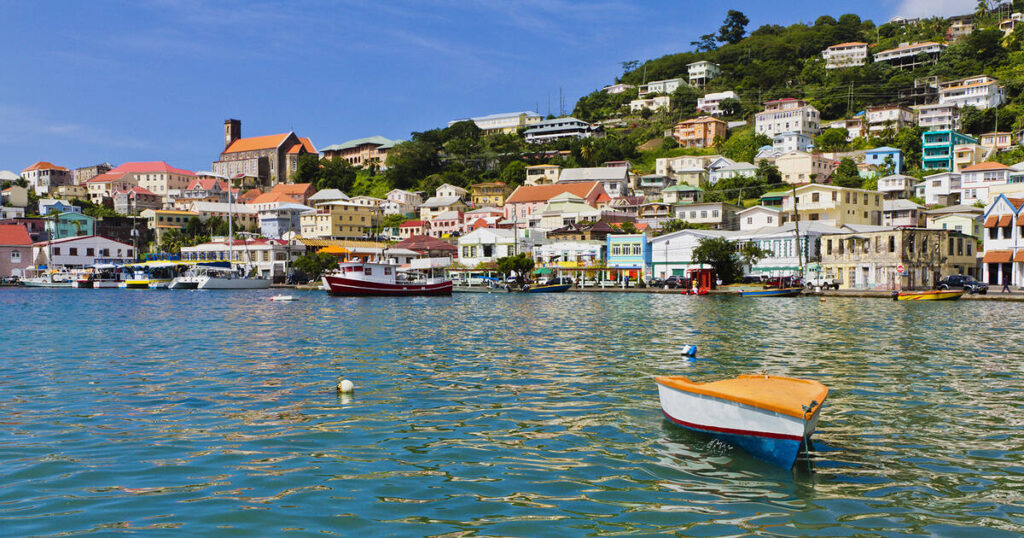
On June 23rd, 2022, a new government was ushered in after ten consecutive years of an NNP Government who governed without an Opposition. The platform of the new Government, the NDC, wasYouth and Transformation. Youth was understood to mean that the new Government would be made up of young people, and these young people would transform Grenada. What Transformation meant has never been defined or explained but the word is constantly used by the new Government in speeches etc.
However, the writer makes the pointthat Grenada was already transformed in the twenty years following the US military intervention in 1983.
This statement is based on experience having lived through the 1962 Blaze government , the 1967 Gairy government, the 1979 PRG government, the Interim government which immediately followed the US intervention of 1983, the 1984 NP government, the 1990 NDC government, the 1995 NNP government, the 2008 NDC government, the 2013 NNP government and finally the current NDC government of 2022.
Prior to 1983 Grenada’s economy never achieved its potential. The revenue from its nutmegs and cocoa could not sustain Grenada’s economy. The banana industry whichbrought some hope to its failing economy had enjoyed preferential treatment in the European market,but the industry collapsed when itspreferential treatment was removed by the WTO.
A Tripartite Commission funded by the US, UK, and Canadian governments in the early 1960’s recommended that Grenada should embrace tourism to supplement its agricultural base and thereby revitalize its failing economy The Commission recommended that the Grand Anse beachfront should be subdivided into fully serviced 5 acre parcels to be leased at peppercorn rates to entities wishing to build a hotel on Grand Anse beach
In addition, the hotel would be granted duty free concessions for construction materials and furniture and fixtures and equipment necessary to establish the hotel. Further the hotel and its owner would be granted tax free concessions on operating profits for a period of 10 years.
The implementation of the Commission’s recommendations attracted the creation of a number of a small boutique hotel like Secret Harbour, the Calabash and Spice Island Inn plus larger hotels like the Grenada Beach hotel and the Holiday Inn. The venture into tourism was successful and for a time the island received some fame for its award-winning small boutique hotels.
However hotel operations were not protected from the negative effects of annual changes in Government’s fiscal policies such as the introduction of increased custom duties, room occupancy and food and beverage taxes As a result in order to maintain the benefits from the tax free concessions on profits, the hotels spent less on maintenance so that many of the hotels were run downand were sold at the end of the concession period.
The transition to tourism had enjoyedlimited success. However, its growth was restricted by an airport that could operate only in daylight hours and by political unrest in the latter half of the 1970’s following the island’s independence in 1974 whichculminated in a coup which installed a Marxist-Leninist People’sRevolutionary Government in 1979.
The policies and practices of the latter government basically destroyed Grenada’s tourism industry and the new government spent little on the island’s infrastructure except for the construction of a large airstrip in the south of the island by workers from Cuba.
The PRG imploded in October 1983 leading to a US armed intervention which paved the way for the return of democracy. The US intervention was followed by the appointment of an Interim Government which lead to the holding of general elections in 1984and the return of the island to democracy.
The Transformation of Grenada
The period following 1984 marks the significant growth in Grenada’s economy following the return to democracy and the rebuilding and improvement of the islands’ infrastructure fueled by Government’s policies and by US, Canadian and EU aid and the active involvement of the OAS.
The holding of free elections in 1984 and the establishment of a Claims Commission in the same year charged with addressing the economic injustices sustained by Grenadians since 1967 were critical to remove the political bitterness that preceded 1984 and provided the population with the confidence that a just society was now being established.
In 1984 Grencoda was founded to provide guidance and support to rural individuals and families and communities to improve their quality of life and in 1985 NEWLO was created to provide vocational and life skills training to disadvantaged young men and women Then in 1988 TAMCC was created to provide tertiary and post-secondary education for Grenadians. The founding of these institutions demonstrated acommitment to improving the quality of life and providing the foundation for the sustainable development of the island.
In 1985 the Government of the day embarked on a program of rural electrification and improved water distribution island wide and the modernization of the islands telecommunications which involved the laying of fiber optic cables
The antagonism between locals and tourists on Grand Anse beach wasremoved by the establishment of Camerhogne Park in 1990 designed and built to be a beach facility for the public, providing them with the same access and facilities available to the hotel guests and giving them their own green space to enjoy Grand Anse beach. This was a most important facility and established that Government cared for its citizens
By 1993 the Cuban built airstrip was transformed into an international airport mainly by US aid and a new and widened road was constructed from the new airport to the islandscapital. Additional infrastructure projects that followed included a widened and improved western main road running from the island’s capital to its northernmost town Sauteurs, improved port facilities for handling containers, improved telecommunications and transportation networks including a new bridge over the St John River.
The period following 1993 marks the significant and unprecedented balanced growth in the island’s economy supported by investment in infrastructure and essentially local investment in tourism plant.
By 1993 the Holiday Inn and Grenada Beach Hotel had been refurbished and was operating onGrand Anse beach and two new major resorts in the Pointe Salines area were in the final stages of construction. These were LaSourceResort and the Rex Resort.
At the end of 1993, the two new resorts LaSource and Rex Resort opened increasing the islands hotel room stock by 312 luxury rooms and providing more than 300 new permanent jobs for Grenadians. These resorts were followed by investments in new hotels , True Blue Bay, Coyaba, Allamanda, Tropicana, Mt. Cinnamon, andSiesta to name a few and major refurbishment of Spice Island Inn, the Calabash, Secret Harbour and the Flamboyant , and a new resort on Calivigny Island and new marinas i.e. St Davids Marina and Spice Island Marina and Secret Harbour Marina and a planned resort and marina at Prickly Bay while the Grenada Yacht Club added new docks. Several dive shops were in opened while the associated boatyards provided for haul out and repair services for the growing yachting industry. Further the islands generation and distribution of electricity was expanded by the new private company that had acquired the Grenada Electricity Services in 1990.
The investment in LaSource Resort was the largest (in excess of EC$50million) undertaken by a local and was the largest investment in the island’s hotel and tourism sectorOnce the resort was opened it became the lynch pin of the island’s tourism creating foreign exchange earnings equivalent to EC$16millionannually. Having only 8% of the island’s hotel rooms LaSourceaccounted for in excess of 20% of the island’s hotel visitors.
Between 1993 and 1999 St Georges University opened its School of Medicine, its Arts and Science graduate programme and its School of Veterinary Medicine contributing significantly to the island’s economy by the expenditure of its foreign students.
Government infrastructure projects completed consisted of a new ministerial complex , the rebuilding of the burnout government buildings and financial complex on the Carenage , new cricket and athletic stadiums and new lighted playing fields at Beausejour, Seamoon and LaSagesse , a new sewage system and ocean outfall for the south of the island to support the investment in hotels and to reduce the pollution of the waters off Grand Anse beach. And new solid waste facilities were created at Perseverance, Telescope Point and in Carriacou. Further the new on shore facilities were created at Grand Mal, Gouyave, and Grenville to support offshore fishing and a new fish market was opened in St George.
Equipment and plant existed on the island to resurface and maintain the existing road network and several of the islands main roads were resurfaced and widened with hot mix asphalt. A new cruise ship port and dock was created in St George, the island’s capital and the Lagoon was dredged and its basin cleaned upmaking it accessible to yachts and the creation of Port Louis marina.
In 1995 the T.A. MarryshowCommunity College expanded to be the sole indigenous educational institution offering postsecondary, tertiary and further education on the island adding several programs to its curriculum. In September 2000 a major secondary school complex was opened at Westerhall.
The original general hospital was renovated modernized and expanded to a 198 bed acute care hospital with Cuban technical assistance in 2002
The above list is by no means complete but provides an idea of the unprecedented expansion of Grenada’s economy. Significant is the fact that in the period most of the private investment was by local entities.
The Transformation described above was made possible by the access to foreign aid and to finance by development institutions such as the CBD, CDC, CFSC, and the GDB and by the Governments investment in infrastructure
Credit is due to Hon George Brizan for making Camerhogne Park a reality and for making the creation of LaSource possible by the provision of Lome V funds which were usedfor the Government’s investment in the resort and to Hon Dr.KeithMitchell who was Minister of Worksin the 1984 NP party and Prime Minister of Grenada from 1995 and who was responsible for the creation and improvements island’s infrastructure critical to Grenada’s Transformation. During the entire Transformation period the island’s GDP exceeded its Debt. Special credit is due Brian Samuel who made LaSource Resort possible by creating the business plan and finding the finance for the hotel which became a major successful capital investment for Grenada during the Transformation Period.
Leon Oscar Taylor 21st January 2026