
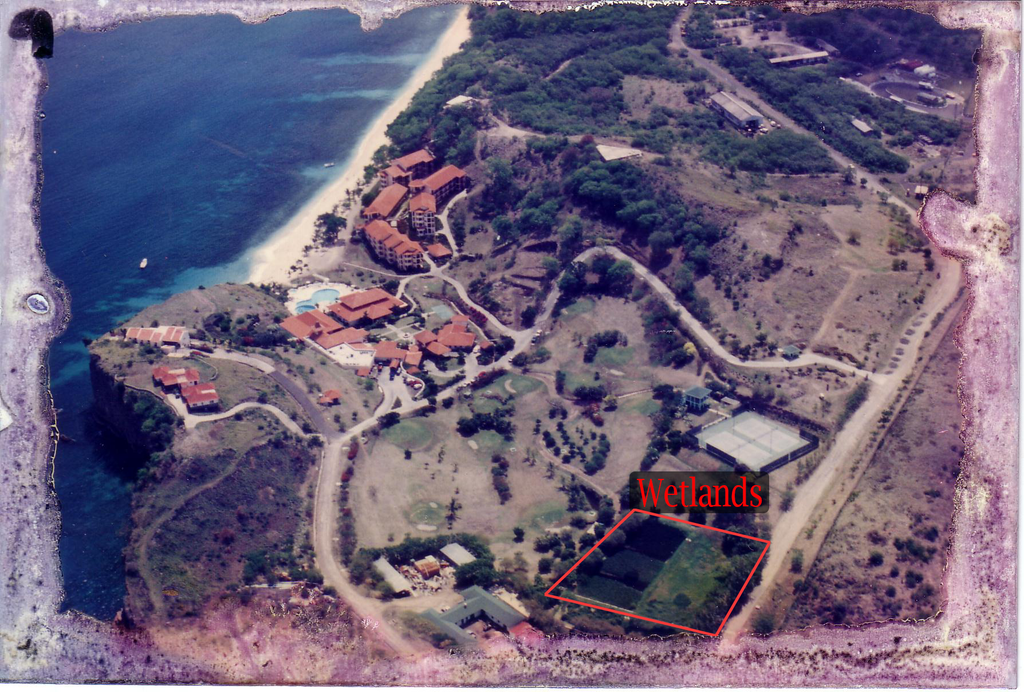
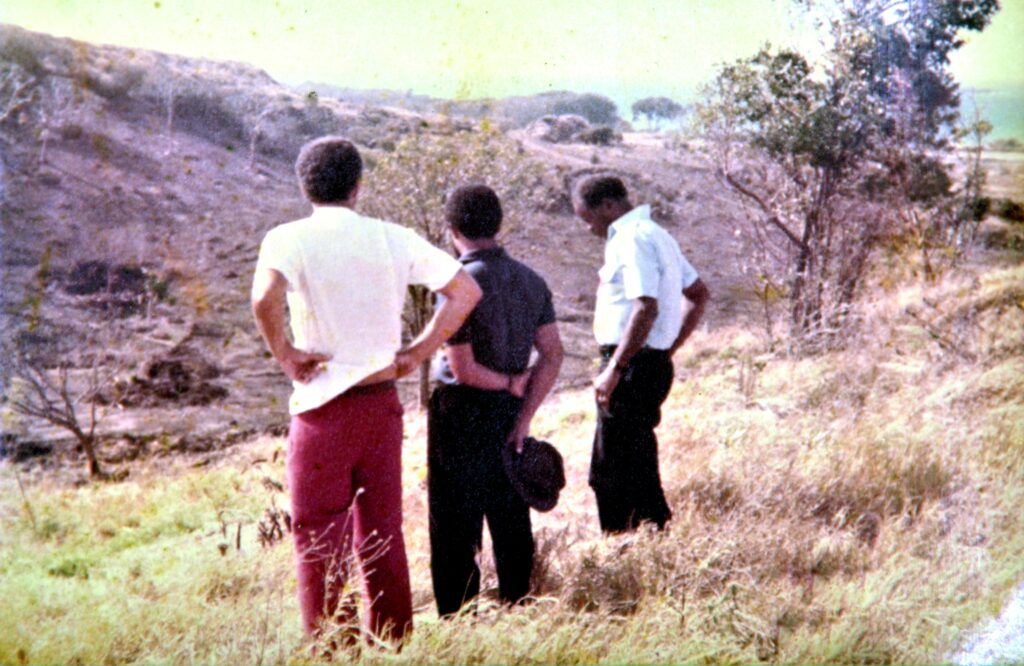
LaSource Resort once Grenada’s leading tourist resort was acquired and renamed by Sandals Grenada in 2012 is located at the southwest tip of Grenada, the driest part of the island, The area is designated as “ Barren Lands “ on the 1867 map of the island and experiences low rainfall and periods of sustained drought In 1985 I set out to transform this barren land which was at the time war torn by the US invasion of 1983 into of verdant landscape with a par 3 golf course. The photo below shows Hon. George Brizan, Minister of Finance, the airport manager, and the writer inspecting the hotel site in 1986.
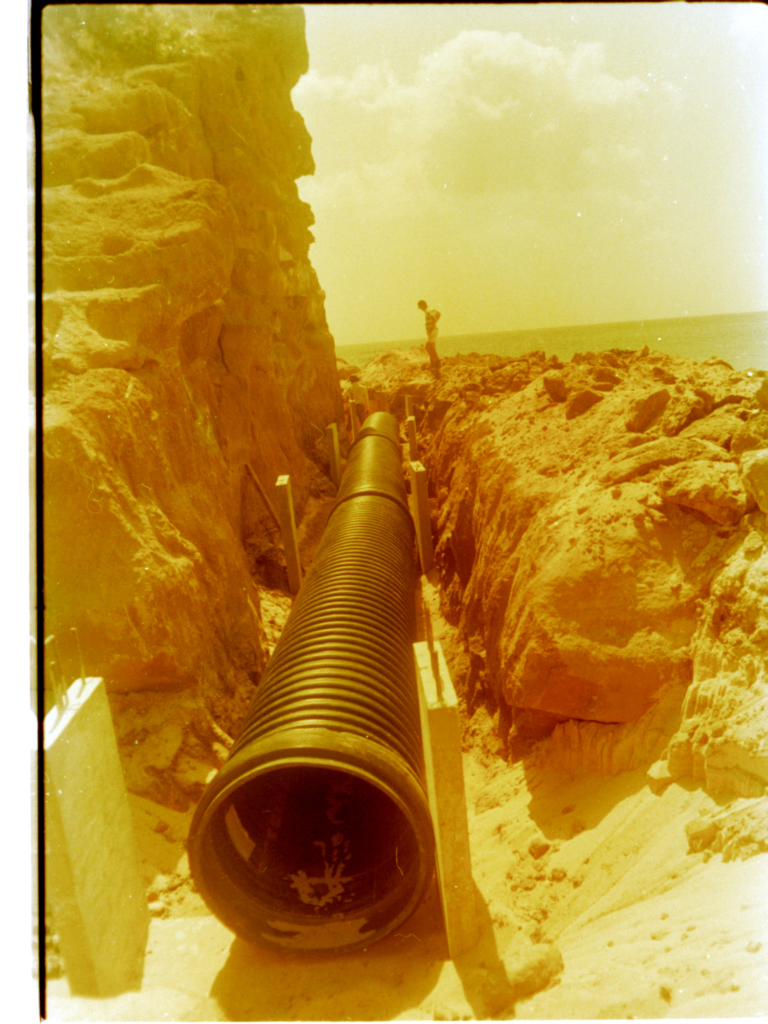
LaSource is located in a narrow valley between two slopes Each slope rose to approx. 140 ft. above sea level. This meant that all surface water would collect in the valley and eventually discharge into the sea over LaSource’s pristine beach To avoid this, before the development of the site commenced my colleague and friend engineer Ralph Adams carried out a hydrological survey of the site and provided me with the size of the outfall pipe needed to divert the runoff from the most severe storm and discharge it into the sea well away from LaSource’s beach This required a 1.0 m dia. pipe which was buried well before the beach and ran along the base of the cliff at the west of LaSource’s beach eventually discharging into the offshore currents thereby ensuring a pristine beach and protecting the offshore reefs in front of LaSource. Few Grenadian hotels if any create their own outfalls to protect their beach and offshore reefs
While clearing the site for the original LaSource in 1985 I was visited by two engineers of the Tennessee Valley Authority who asked me how I planned to treat the sewage from the 100 guest room LaSource which was not yet constructed. My answer was that I would naturally have a sewage treatment plant Their response was that sewage plants required technical expertise to operate and such expertise was uneconomical for plants which had to process less than 70,000 gallons of sewage per day, and that sewage plants were unable to handle shock loading – that is a sudden flow of sewage exceeding the plant’s capacity. In such a case the plant would have to be shut down and cleaned and then restarted.
In response they stated that in the days before sewage plants, the sewage from a village would be discharged into a nearby natural wetland bordering a river where it would be polished and the nutrients extracted by the plants in the wetlands. The resulting effluent from the wetlands would discharge into the river without polluting it
The TVA had extensive experience with creating artificial wetlands for small developments in areas remote from sewage lines, a situation which LaSource was in and they recommended this for LaSource. I was impressed by the photos of their artificial wetland projects. I therefore asked them to revisit LaSource and design an artificial wetland system for LaSource which could be accomodated in the southern end of the site because the then International Airport restrictions extended 200ft into LaSource’s property creating the space in which the wetlands could be located. The area was adequate for their wetlands design as it exceeded 70,000 sq.ft.
After I hired them to design the wetlands system for LaSource the TVA engineers returned and gave a seminar on the function and operation of wetlands and its plants in removing nutrients and polishing waste water before they presented their design for LaSource.
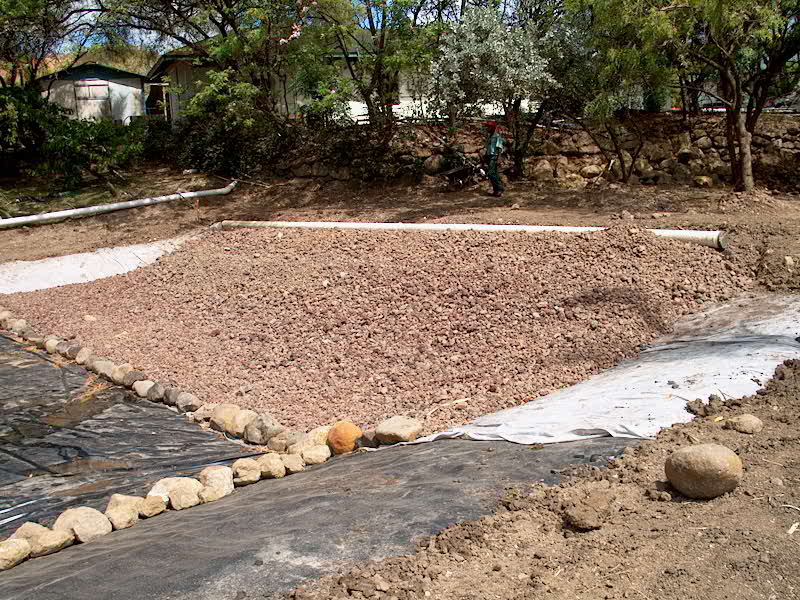
Their design consisted of a large septic tank approx. 6ft deep by 8ft wide and by 72ft long into which the macerated sewage from LaSource would be pumped and the outflow from the septic tank would discharge by gravity sequentially into 4 separate ponds which occupied the 70,000 sq. ft. The ponds were relatively shallow. Each had at its end a slotted 4ins dia pvc pipe covered by gravel which acted as a biofilter Outside the pond the pvc pipe was connected to an elbow which could swivel to control the level of water in the pond. The overflow from the swiveled elbow fell into a biofilter chamber filled with gravel from which it flowed to the next two ponds where the grey water was discharged uniformly across it and then to the final pond
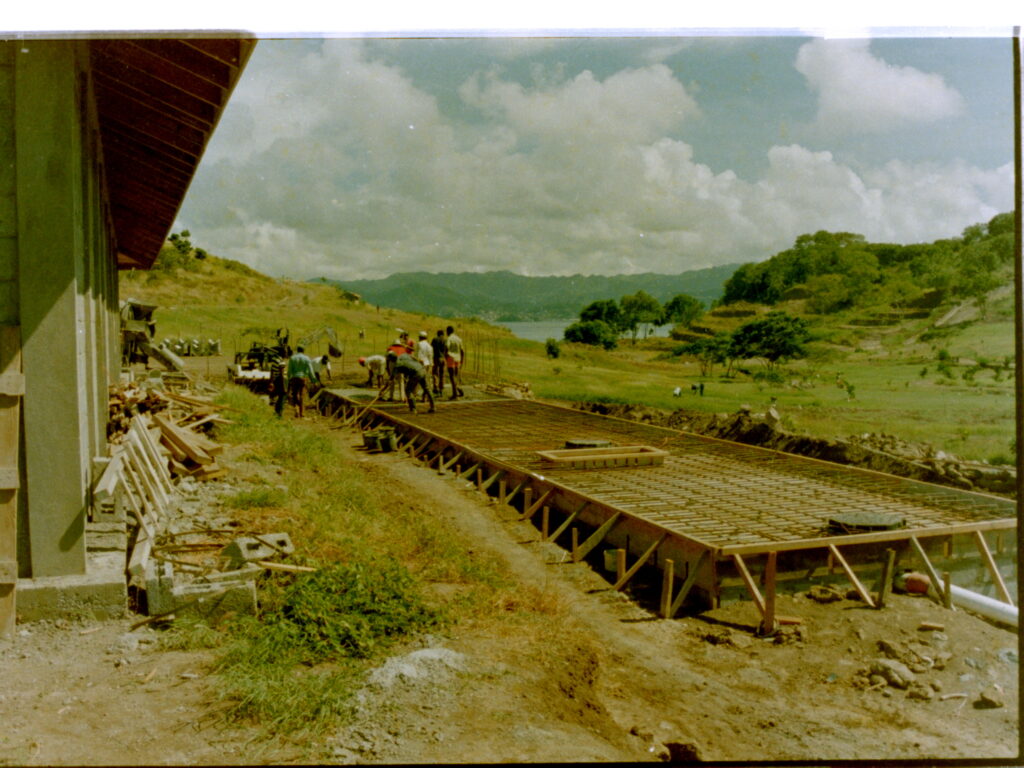
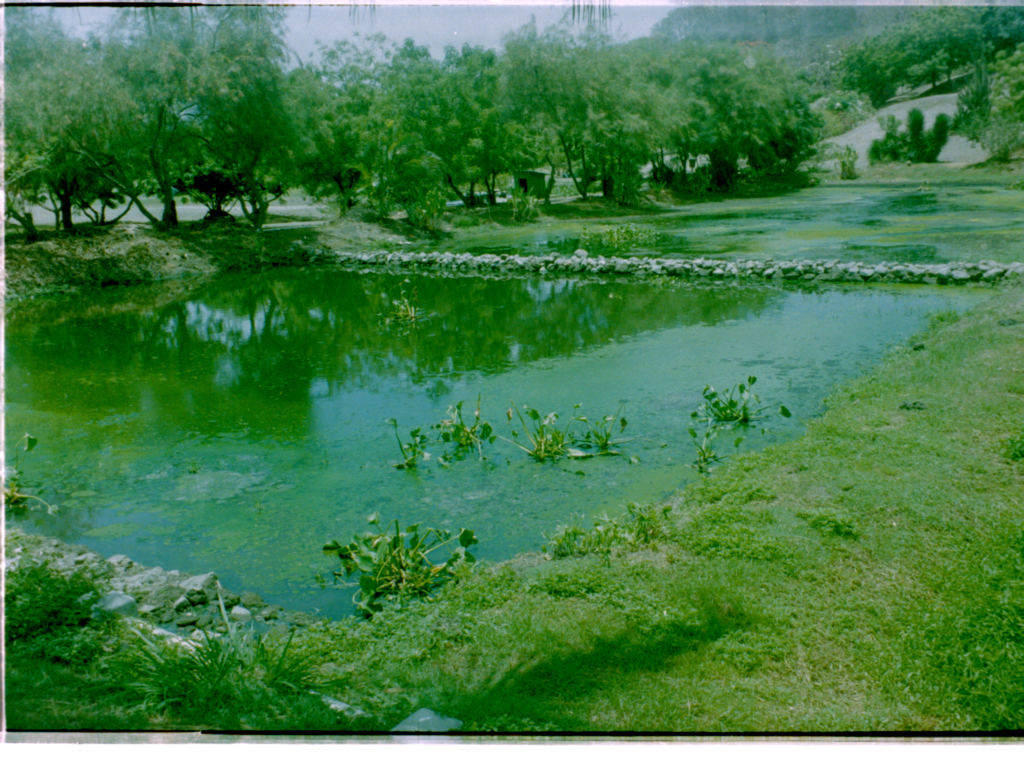
The ponds once flooded were planted with bullrushes from Grand Etang, a crater lake located at the center of the island The grey water in the final pond was used to irrigate the landscaping of the hotel and the greens of the hotel’s .par 3 golf course so there was no overflow from the final pond
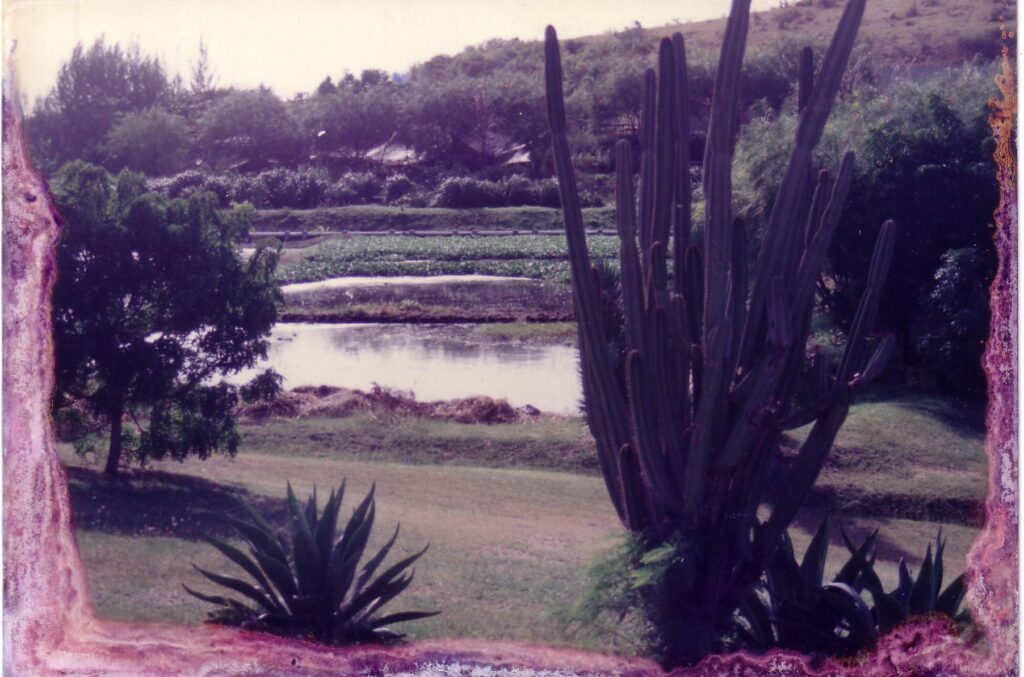
The wetlands were a success There was no sewage smell. Students from St Georges University made a weekly visit to observe and study LaSource’s wetlands which were also the subject for PhD thesis for a foreign student.
Unfortunately in time the wetlands ceased to function properly because the hotel’s maintenance engineer started to dump waste diatomaceous earth from the hotel’s swimming pool filter system into the wetlands clogging the flow through the bullrushes which restricted the function of the wetland’s bullrushes .
Another problem arose due to grease from the hotels two kitchens septic tanks cannot handle grease which in LaSources case formed a thick layer on the surface of the fluid in the septic tank reducing its efficiency and combined with the problem in the wetlands produced an obnoxious smell from the wetlands Fortunately the wetlands were distant from the main hotel complex so that hotel guests did not experience the sewage smell But the condition in the wetlands was intolerable particularly in the evening and a solution had to be sought.
It was obvious that the main source of the grease originated from the hotel’s main kitchen which prepared 3 meals a day for the hotels 186+ guests and the staff kitchen which prepared lunch daily for the 240 permanent staff. The hotel’s kitchen and the staff kitchen were both supplied under sink grease traps but these were both inadequate .
I therefore once again sought the advice of Ralph Adams now of Adams Consulting International Barbados longtime friend, advisor and client who visited LaSource and reviewed my sewage problems Ralph recommended and installed a large above ground Kessel automatic external grease separator for the main kitchen and a smaller external grease separator for the staff kitchen and further he designed and installed an ingenious aeration and recirculation system for the septic tank that sat on top of it. Unfortunately I have been unable to locate drawings of Ralph’s aeration system since some 26 years have passed since its design and installation.
Having to deal over the years with the problem of treating the septic tanks effluent I discarded the wetlands and converted these to two large deep lined ponds aerated by submerged aerators the larger one becoming a lake with a fountain in front the Relaxation Pavilion.
The first pond received the septic tank effluent uniformly through a large covered biofilter and had a swivel elbow to control the water level in the pond and the discharge from the swivel elbow fell into a biofilter chamber which discharged uniformly into the final large pond or lake. The uncovered biofilter is shown below.
The new system worked perfectly. There was no sewage smell and the artificial lake became a feature of LaSource. Its water was used for irrigation of the landscape so there was no overflow. The water level in the lake was controlled by a 4ins dia pvc pipe with a swivel elbow.
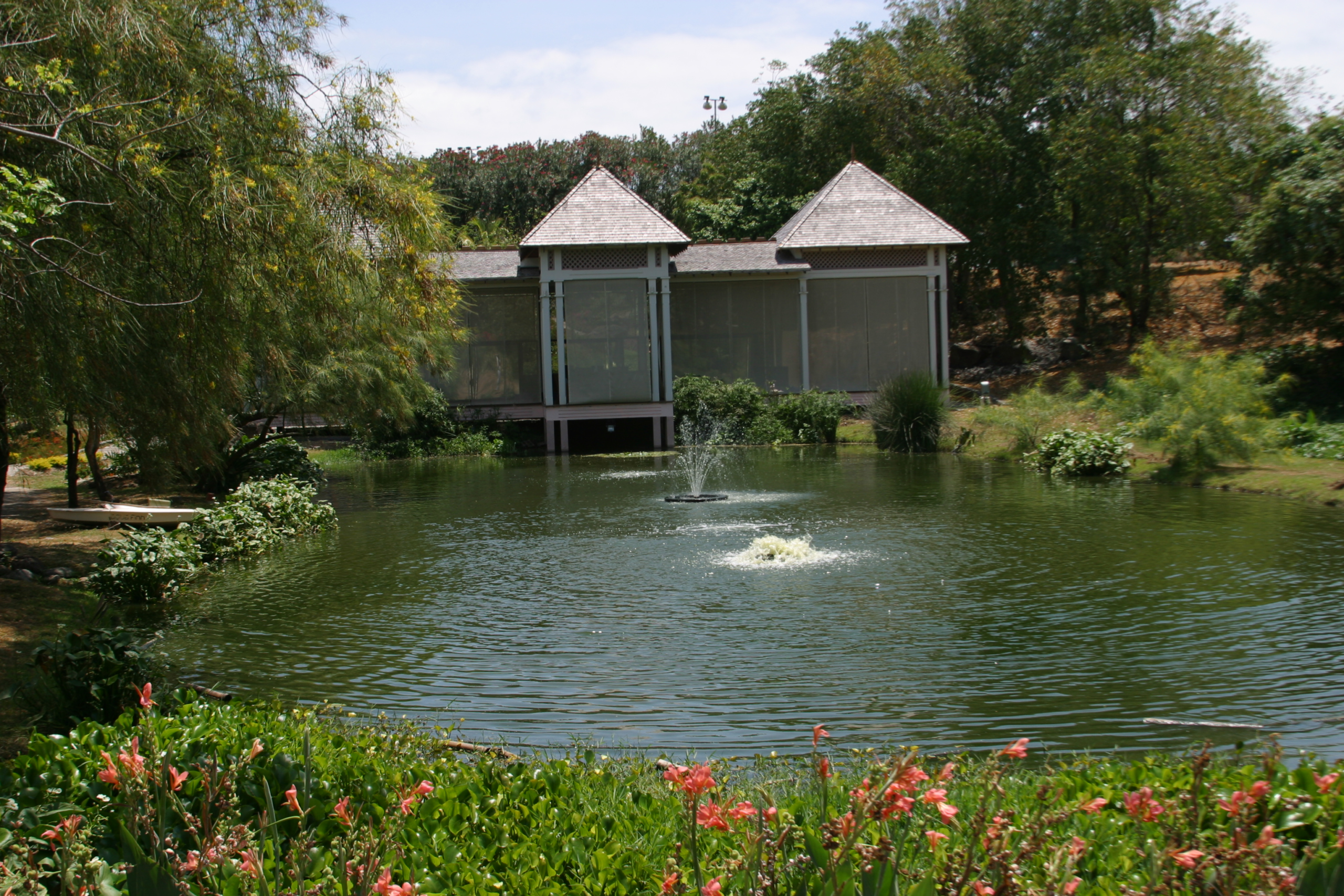
In no time it became a sanctuary for wild life. Blue teal ducks rested there each November on their journey south, families of water fowl nested on its banks, herons fished in the shallows and local birds were attracted to the flowers of the Morenga trees planted there. Neem trees were also part of the landscape and a Ylang Ylang tree perfumed the air.
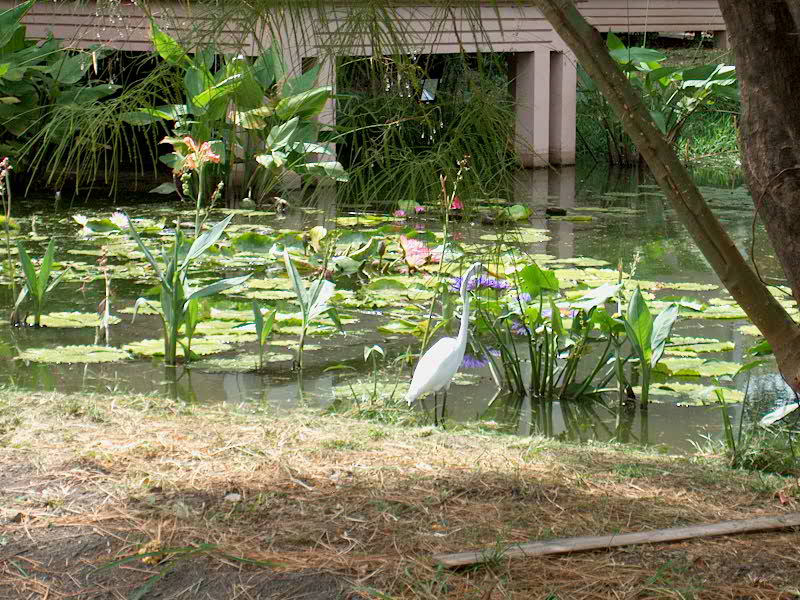
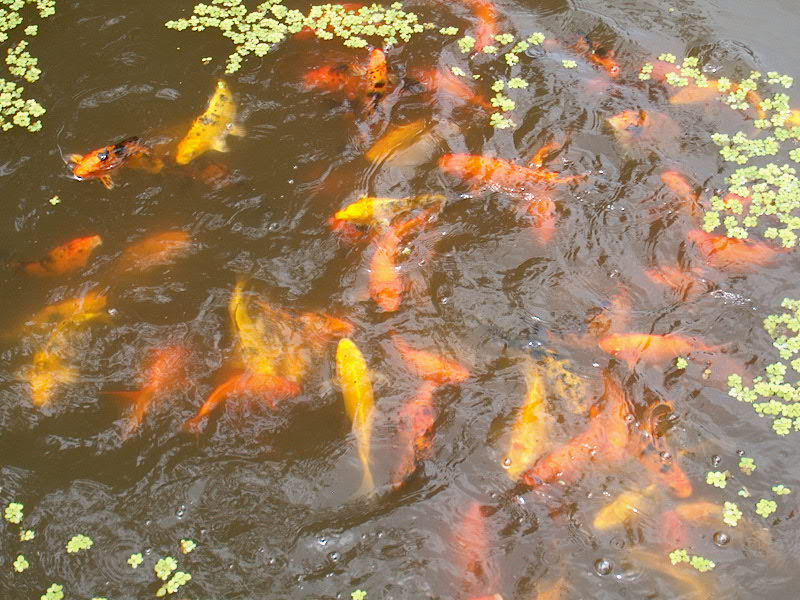
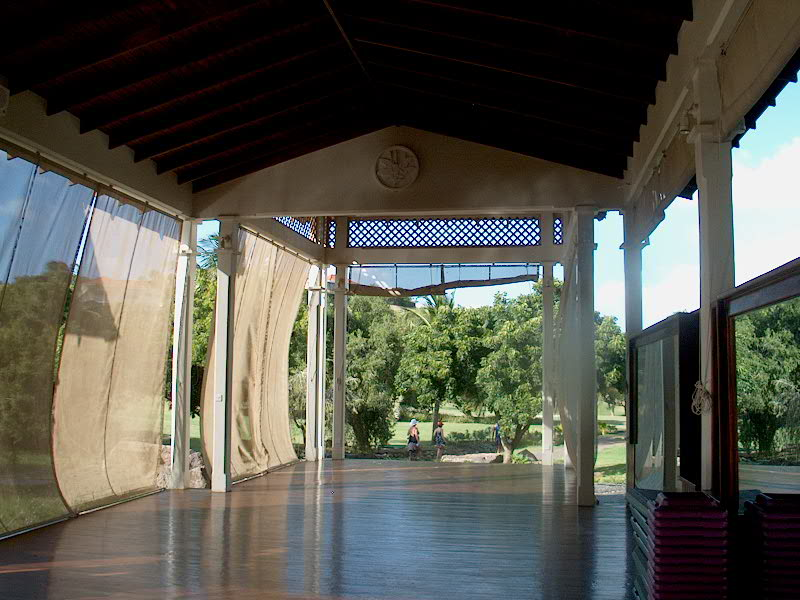
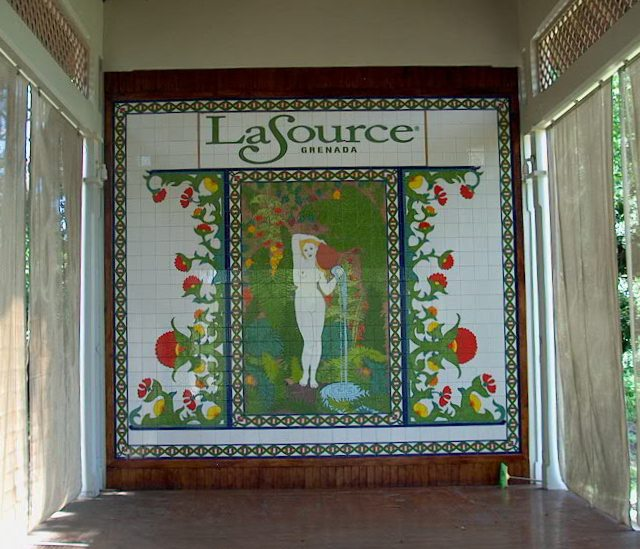
It was a relaxing area for LaSource’s guests where they attended classes in yoga, tai chi, and meditation and in aerobics in the Relaxation Pavilion which sat at the end of the artificial lake.

From the very early days of developing the site I had the vision that a naturally appearing river and not a concrete drain should drain the valley. I avoided having a concrete drain running through the golf course but I had no experience in creating rivers so the site drained naturally to the ocean outfall. But then fortune smiled on me.
In the late 90’s on one of the many times I visited the office of Lane Pettigrew in Miami I ran into Bruce Morgan. Lane was LaSource’s architect. Bruce was a super eccentric character both in appearance and in his life style. It is easy to get distracted from the subject matter of this article by relating my experiences with Bruce. His speciality was using natural rocks to create rock gardens, structures and pools Each year he worked for 8 months and disappeared for the remaining 4 months in some jungle somewhere. He had designed and built the rock waterfall and pool for Fort Young Hotel in Dominica one of Lane’s numerous projects in the Caribbean. I was impressed and decided to retain him to build my river which I intended to use as feature to enhance the experience of visiting LaSource’s gardens and for further aeration and polishing of the grey water from the artificial lake.
Bruce visited LaSource and we laid out where the river would emerge as a spring uphill of and close to the Relaxation Pavilion and its route to its final pond. The source of water for the river was the artificial lake. In the final pond of the river a 450gpm pump fed a buried 4 ins dia pvc pipe which ran uphill to the “source” of the river The river bed was lined with concrete reinforced with mesh. Its route downslope was defined by the volcanic boulders individually selected by Bruce from the interior of the island and trucked to LaSource. Each boulder of the river was placed individually by a large crane with a sling under Bruce’s directions As can be seen from the photo below the river with its boulders appeared perfectly natural and most importantly the river was an important part of LaSource’s sewage treatment It added aeration to the lake water polishing it further.
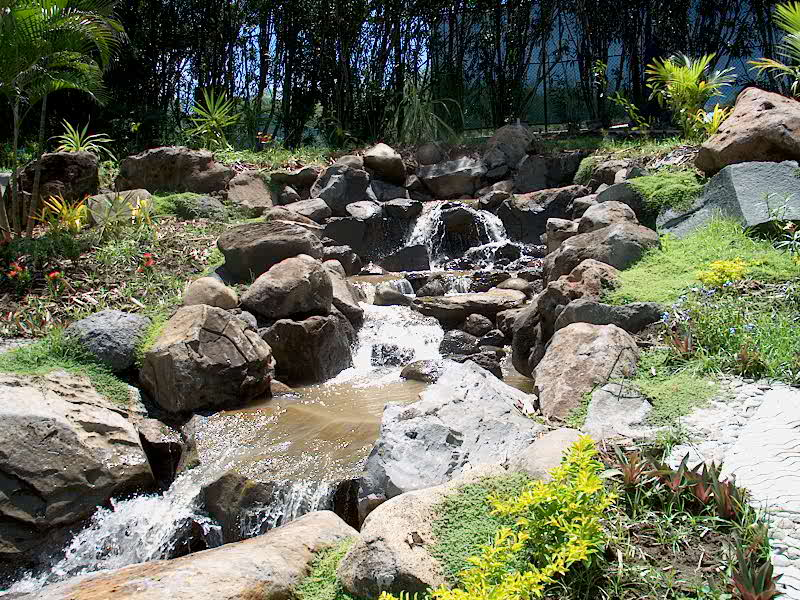
I decided that the river and the area around the Relaxation Pavillion must be beautified by landscaping. I hired landscaper Ross Helmsley for this purpose and we proceeded to work together to create the landscaped river shown in the photos below.
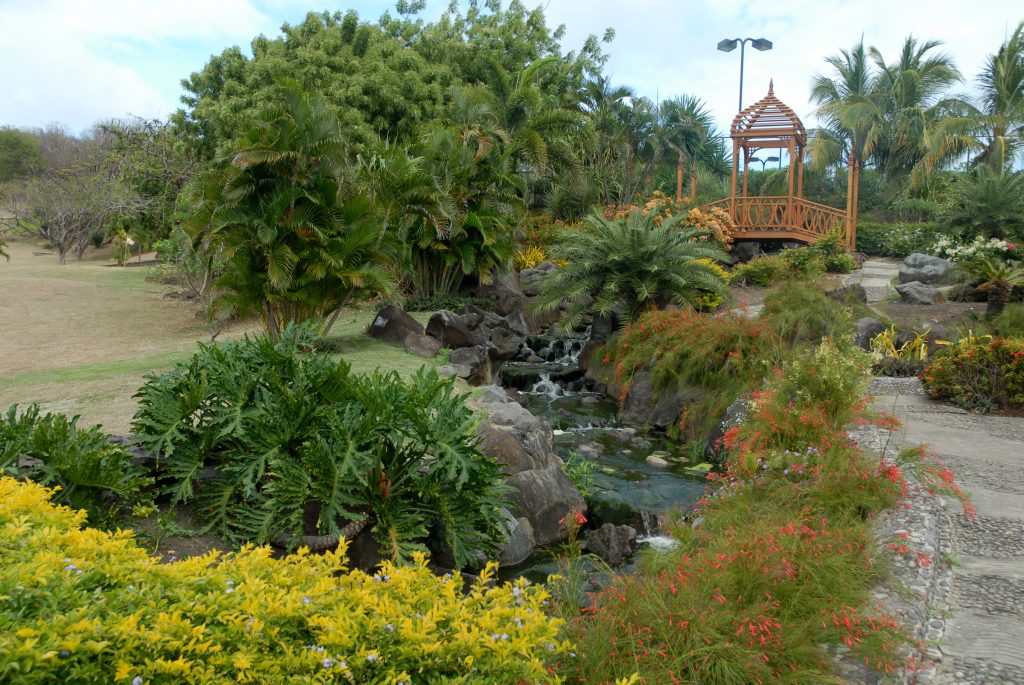
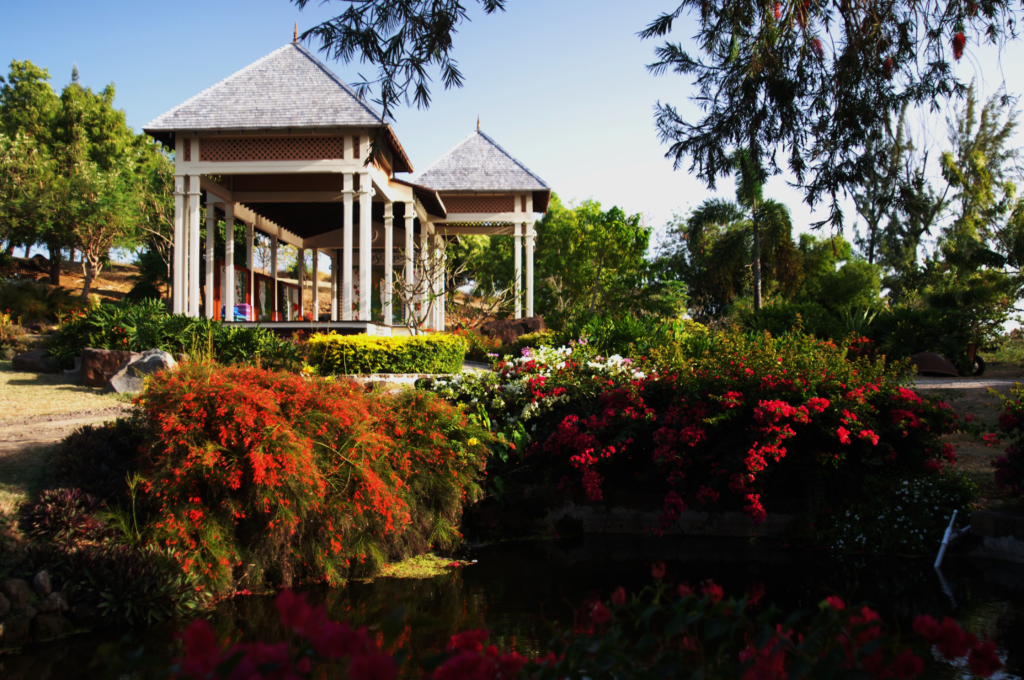
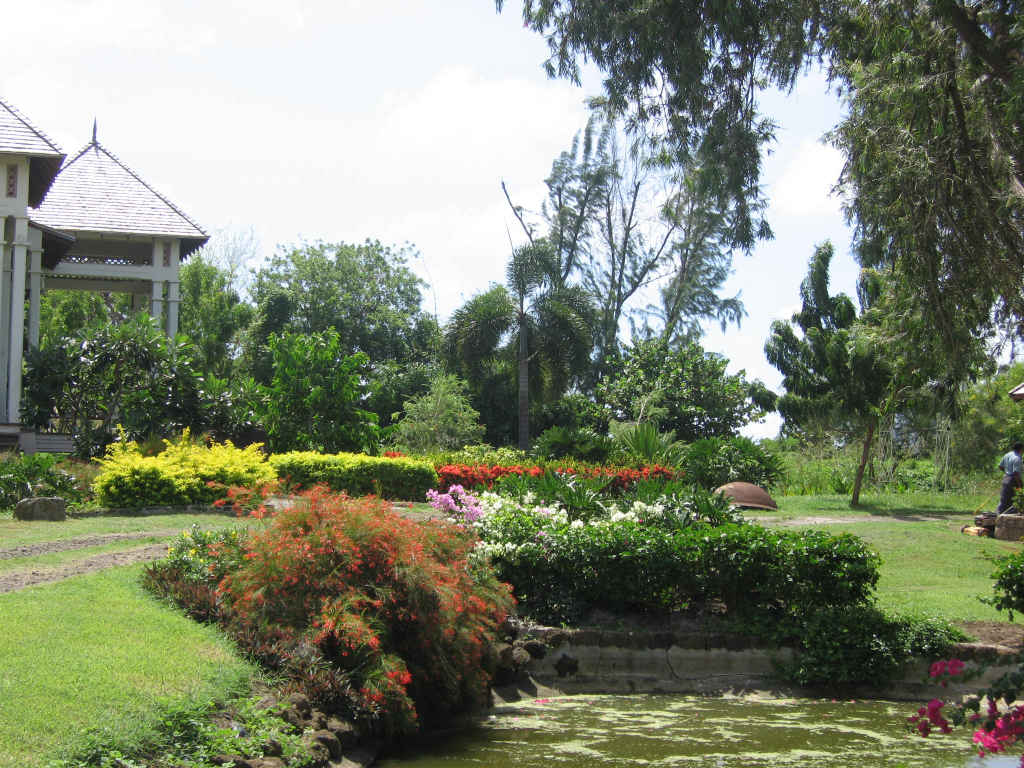
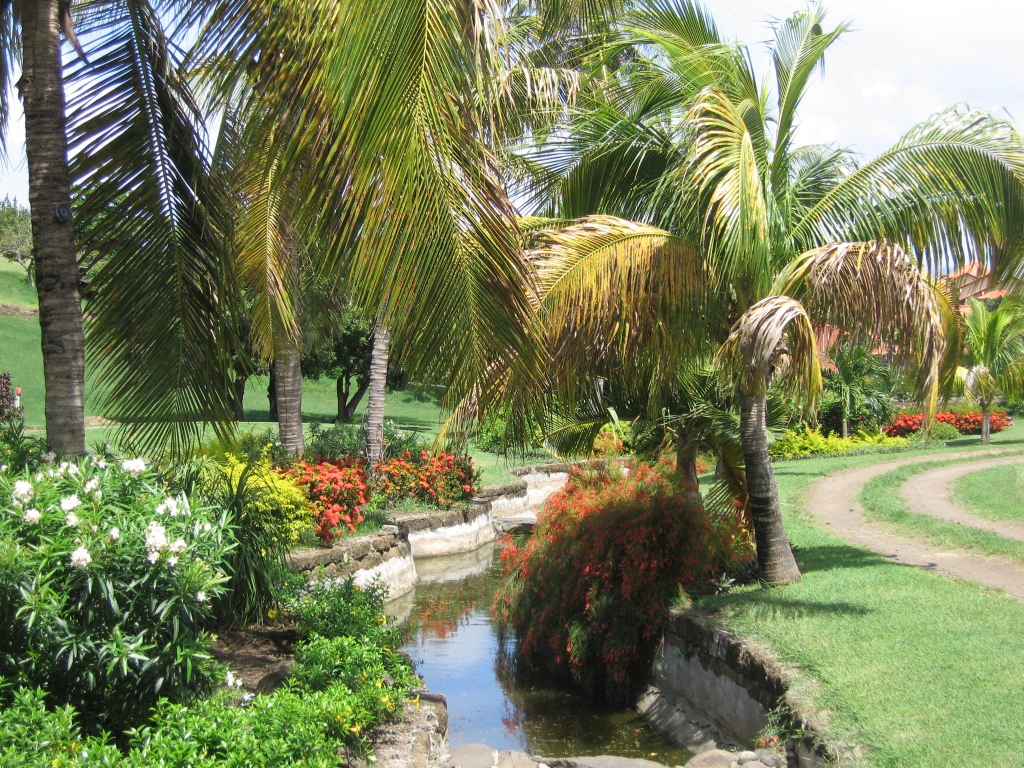
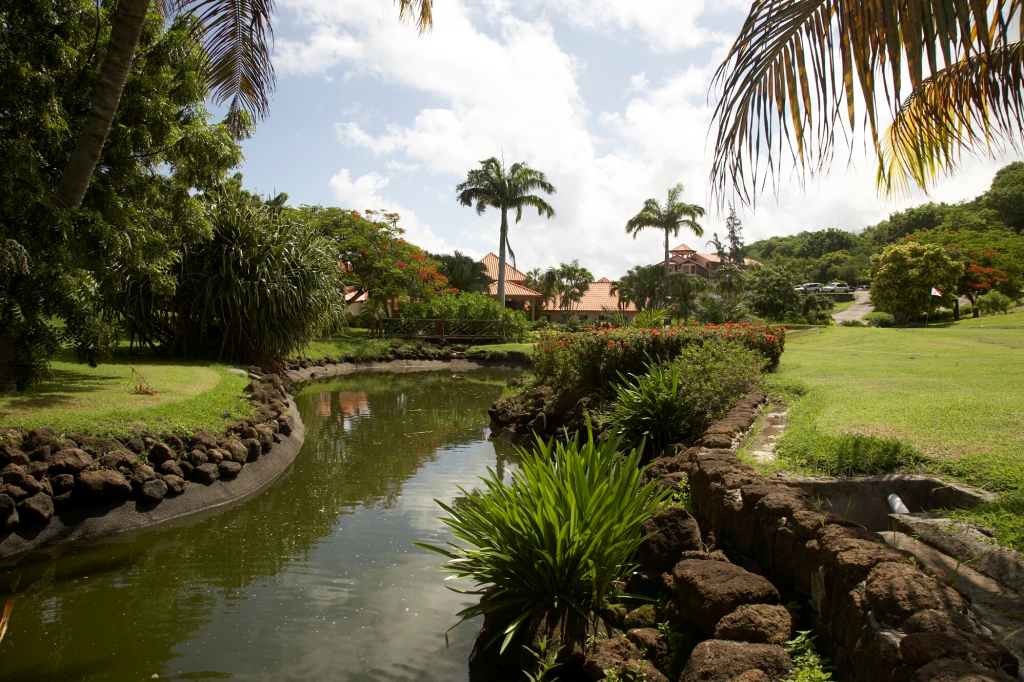
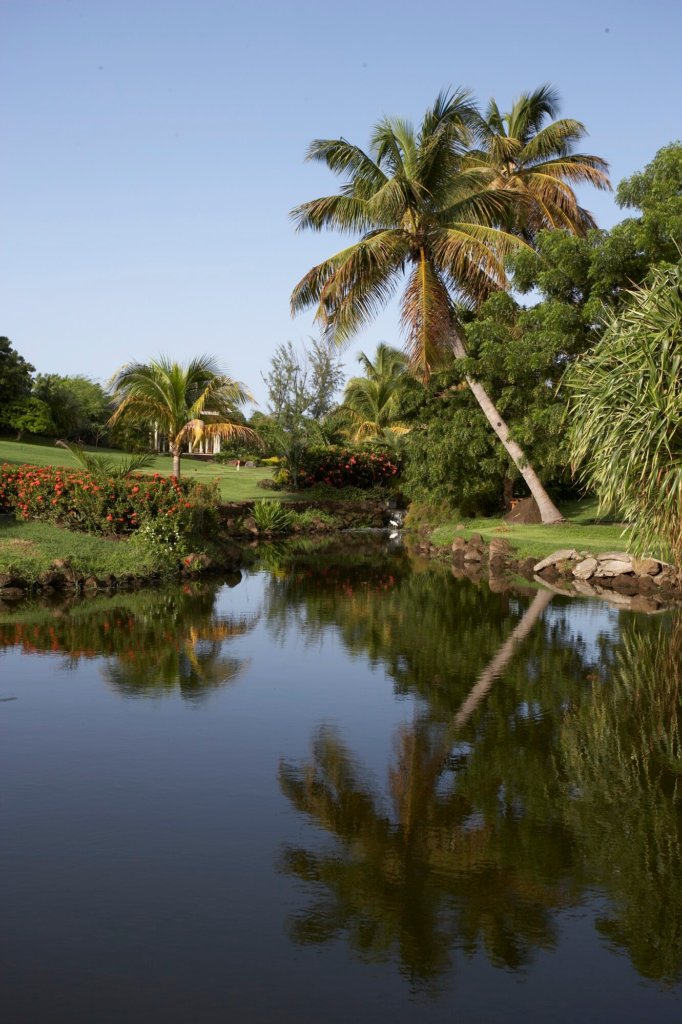
The area of the river, the relaxation pavilion, and the lake and the babbling and cascading water became a sanctuary for anyone at day or night who wished to relax or meditate. They could sit in the pavilion surrounded by nature and flowing water and quietly relax, listening to the cries of the birds that lived on the banks of the lake, or the occasional hoot of a passing owl at night . It was exceptionally relaxing and restorative experience not available at other resorts. The way to the Relaxation Pavilion and to the river along the bank of the artificial lake was enchanting as was the landscaping behind the Pavilion.
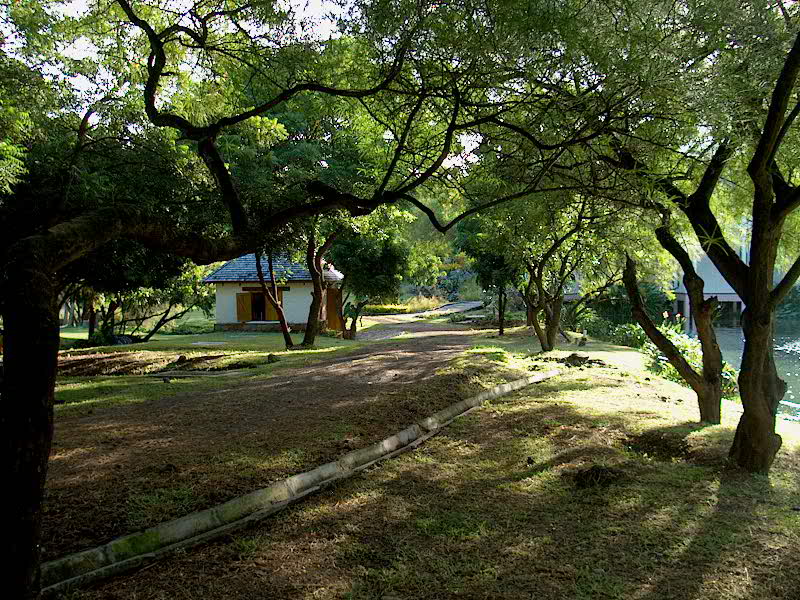
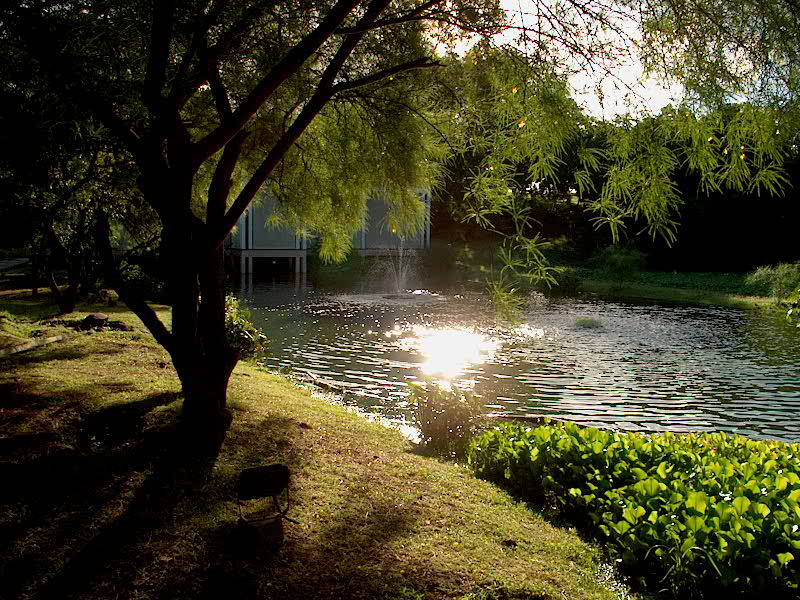
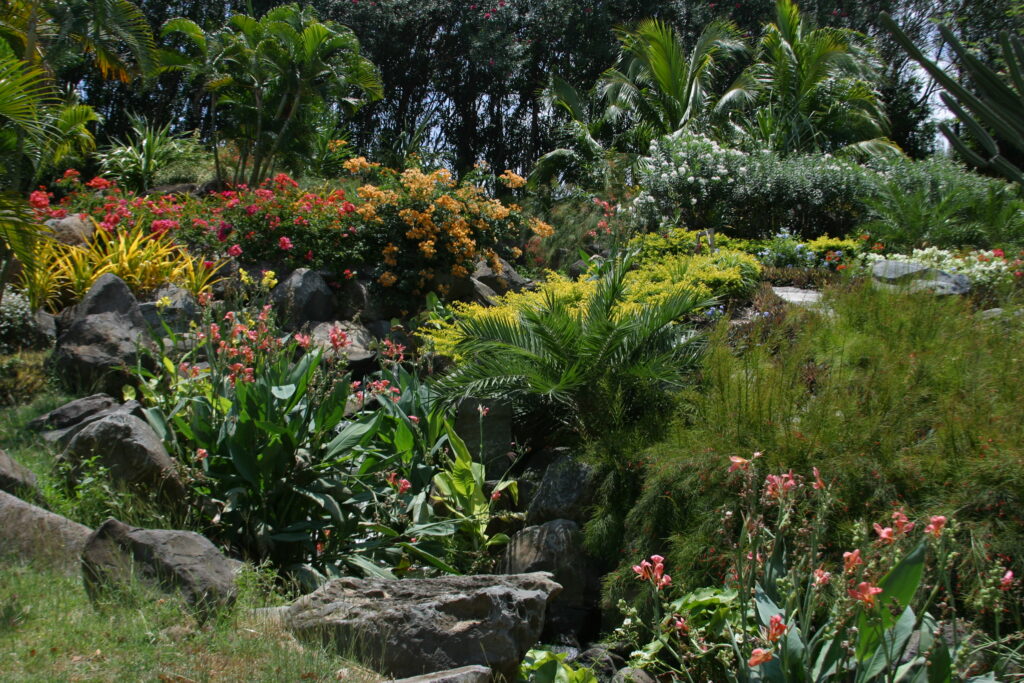
The landscaping and the setting of the river were simply beautification of a unique way to treat the sewage of LaSource which avoided resorting to a sewage treatment plant The system emitted no sewage smell, handled shock loading without loss of function, and was low in energy consumption. It created a sanctuary for wildlife and an environmentally friendly and attractive natural area to be enjoyed by LaSource’s guests and visitors and its employees. The artificial lake and the river though interconnected appear to be separate entities.
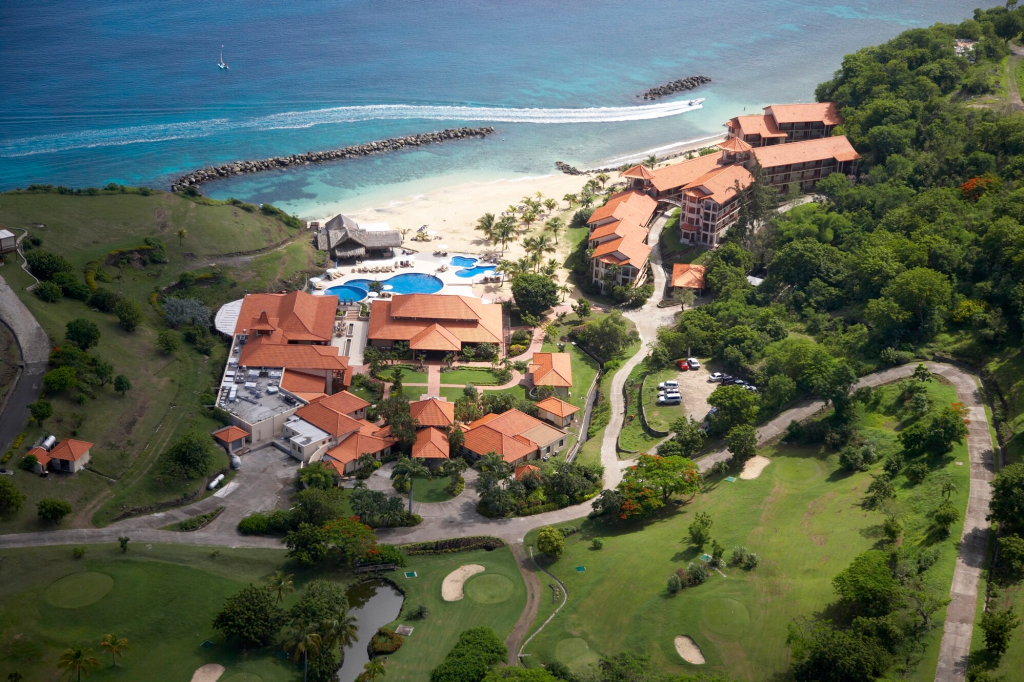
The photo above shows the completed renovated LaSource in February 2008 after hurricane Ivan. The end of the river can be seen on the other side of the hotel’s entry road.